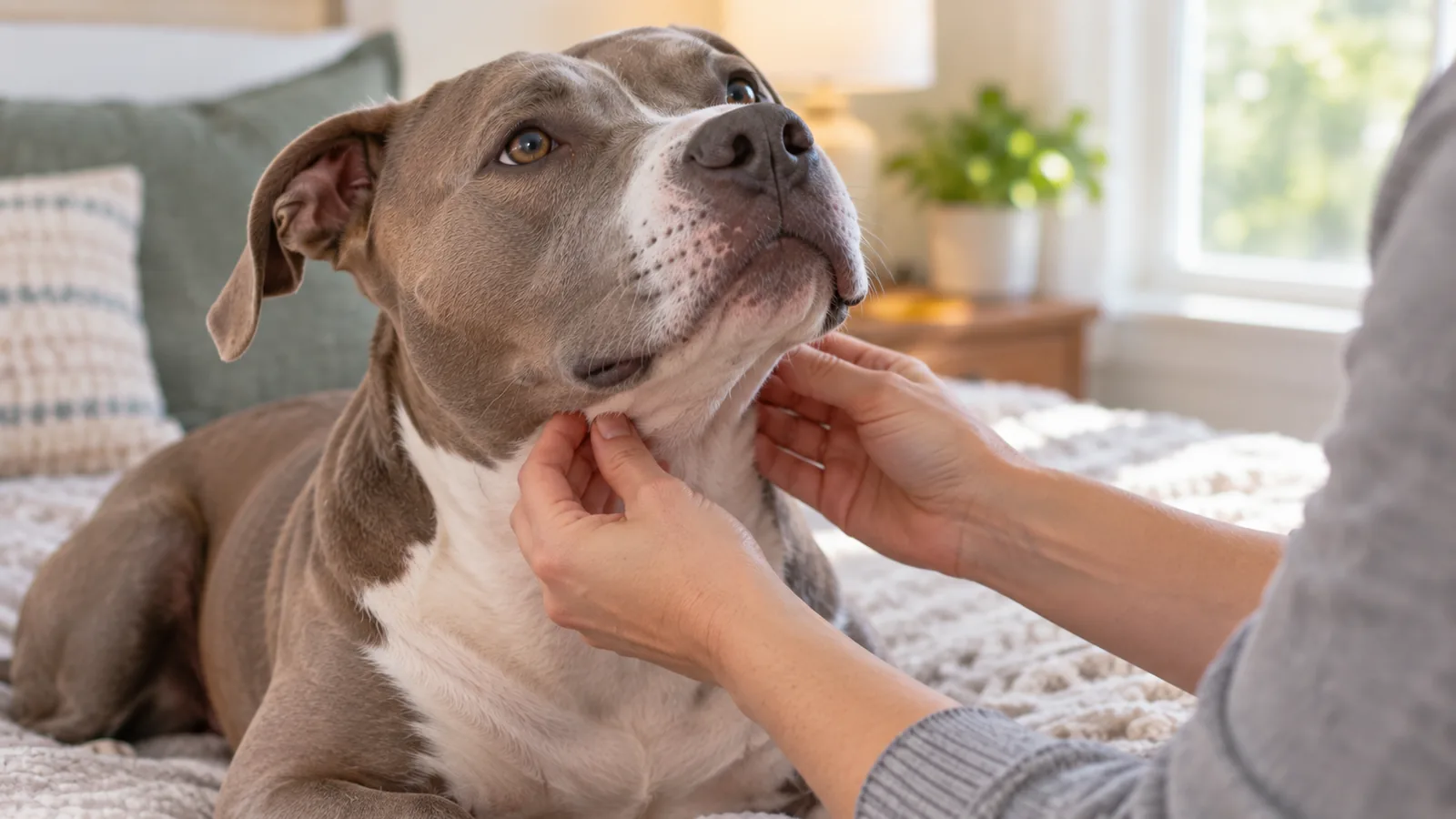
The point where a swollen lymph node in your pet stops being normal is not a single size; it is when the node keeps growing, turns firm, feels anchored to the tissue beneath it, or is joined by others in different parts of the body. Lymph nodes change size all the time as the immune system responds to whatever is happening nearby, and young animals and those with itchy, allergic skin often carry mildly enlarged nodes for months without anything being wrong. A node that is simply reacting to a minor infection and one that marks the start of something serious can feel identical on the day you find them, so the first stop is an exam, not a wait. A swelling that already shows one of those four changes is worked up right away, and the usual starting point is a quick needle sample checked under the microscope, which tells the two apart and confirms it is a lymph node at all.
At Northwood Veterinary Hospital, we check the node and the area around it, take a needle sample when one is warranted, and, since deer ticks come with living in New Hampshire, add testing for tick-borne disease when the exam points that way; it looks for Lyme, anaplasmosis, and the other infections they carry. Feeling under the jaw, in the armpits, and behind the knees is easier on a pet who trusts the hands doing it, so we go slowly with anxious dogs and cats. If you have found a swelling on your pet, whether it appeared this week or months ago, book an appointment and we will take that first careful look.
If You Just Found a Lump, Start Here
- A node that keeps growing, turns firm, feels anchored to the tissue under it, or is joined by swollen nodes elsewhere needs an exam rather than a wait-and-see week.
- Infection, inflammation, immune disease, and cancer can all enlarge a lymph node, and none of them can be told apart by feel alone.
- A fine needle sample read under the microscope is quick, usually needs no sedation, and answers the question for most pets.
- Monthly hands-on checks at home aren't about measuring; they're about noticing what changed.
Which Pets Are Most Likely to Develop Swollen Lymph Nodes?
Puppies, kittens, and dogs with itchy allergic skin carry mildly enlarged nodes more than any other group, because their immune systems are busy, and any dog who walks through New Hampshire brush adds tick exposure on top. Age shifts the odds most: a ten-month-old Lab with a puffy node and itchy paws is a very different conversation from a nine-year-old with the same finding. Golden Retrievers, Boxers, Bullmastiffs, Rottweilers, and Basset Hounds all carry higher-than-average lymphoma risk, and Boxers tend to be diagnosed younger. Cats follow their own pattern: an indoor cat has little exposure to the viral causes, a cat who goes outside has real exposure, and hunters add toxoplasmosis and intestinal parasites to the list.
The Job Lymph Nodes Do, and the Five Spots You Can Reach
Lymph nodes are the immune system's filtering stations, straining lymph fluid for bacteria and viruses and organizing the response that clears them. Five pairs of lymph node locations sit shallow enough to find with your fingertips: behind each knee, in the groin, inside the armpits, just ahead of the shoulder blades, and beneath the jaw.
A healthy node in a medium-sized dog feels like a small soft olive, and in a cat it can be hard to find at all. Enlargement means that station has switched on.
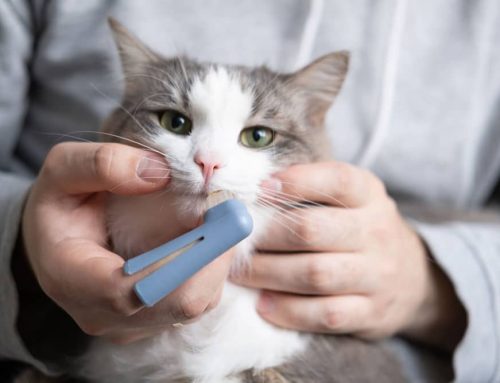
A home check takes a minute and works best when your dog is sprawled on the floor or your cat has claimed your lap. Use flat fingers rather than a pinching grip, and run both hands down the matching spots on each side at once to compare left with right. Once a month is plenty. We check those same five spots during nose-to-tail wellness exams, which gives us a baseline to compare against when something feels off at home.
Why Do a Dog's or Cat's Lymph Nodes Swell?
Swelling means the immune system is working on something nearby or throughout the body: an infection, an inflammatory or immune-mediated disease, or cancer. A node stuck to the tissue beneath it worries us more than one that slides freely under your fingers.
| What your hands and our exam find | What that pattern tends to mean |
| A single big node beside a hot spot, an infected ear, or a rotten tooth | Local infection draining into that node |
| Warm, painful, soft swelling | Active infection or an abscess |
| Every reachable node up at the same time | Systemic infection, immune-mediated disease, or lymphoma |
| Firm, painless, fast-growing nodes in a pet who feels fine | Lymphoma until cytology says otherwise |
| A fixed node beside a known lump | Spread from a nearby tumor |
Whatever the pattern, this is a sick visit rather than a routine one, and our illness and injury care handles these every week.
Infections: the most common reason a node gets big
Bacteria, viruses, fungi, and parasites all recruit the lymph system, and the node nearest the problem responds first.
- What our ticks carry: In New Hampshire, Lyme disease often swells the node closest to the bite before fever or shifting lameness appear. Ehrlichia and Anaplasma ride those same ticks and can push nodes up throughout the body while the only sign you notice is a dog who seems tired and off her food.
- Bacteria from water, bites, and tooth roots: A dog who drinks from puddles, ponds, or wet soil where wildlife has urinated can pick up leptospirosis, which goes after the kidneys and liver and often arrives with fever, vomiting, and nodes enlarged on both sides. Mycobacteriosis is a rarer cause of slow, chronic node and skin changes in cats, while bite wound abscesses and infected tooth roots are the everyday versions.
- Worms, fleas, and mites: Toxoplasmosis can swell nodes alongside a vague fever and a smaller appetite, and a heavy intestinal worm burden or a serious flea or mite infestation keeps the whole immune system switched on.
- Viruses that pass between cats: Feline leukemia virus and feline immunodeficiency virus each swell nodes while quietly lowering a cat's defenses against everything else, and testing beats guessing in any cat with outdoor access.
- Soil and air fungi: Aspergillosis occurs across regions and can involve the nose, sinuses, and the nodes draining them, while blastomycosis and histoplasmosis belong mostly to the Midwest and South and Valley Fever to the desert Southwest, so travel history matters as much as where a pet lives.
Cancer: what lymphoma looks like at the start
Canine lymphoma accounts for more sudden, all-at-once node swelling in dogs than any other diagnosis, and many of those dogs are still eating, playing, and acting entirely normal on the day the lumps turn up. Some also start drinking and urinating more than usual, which comes from a rise in blood calcium and is worth mentioning to us even if the nodes are what brought you in.
Roughly one in fifteen dogs born today will develop the disease, and the odds of lymphoma in Golden Retrievers run closer to one in eight. It isn't a single illness, either: B-cell and T-cell forms behave and respond differently and carry different outlooks, so the first sample shapes the plan.
Feline lymphoma settles most often in the intestinal tract, where weight loss, vomiting, and a shrinking appetite show up long before anything feels swollen under the jaw. Mast cell tumors and carcinomas can also seed into a nearby node, which is why we sample the node beside a known lump as part of working that lump up.
Immune-mediated disease and other causes
Some cases involve neither germs nor tumors. In immune-mediated hemolytic anemia, the immune system attacks red cells it should be protecting, and the weakness, pale gums, and reactive nodes that follow can look exactly like an infection picked up outdoors. Lupus and immune-mediated polyarthritis run a similar course through skin, joints, and kidneys, leaving nodes enlarged while a dog runs a fever and shifts stiffly from one sore leg to the next.
Mild swelling in the node nearest an injection site is one of the more common vaccination reactions, and it usually settles on its own within a day or two. Anything that lingers needs the same workup, because the surface gives us no way to sort one cause from another.
How Soon Should a New Swelling Get an Appointment?
A new swelling should be seen inside about 48 hours in most cases, and a short list of findings makes it a same-day trip instead. How fast it grew and how your pet is acting decide which.
- Same day, no waiting: Labored breathing, throat or neck swelling that changes how your pet swallows, pale or white gums, stumbling, or sudden collapse. We provide emergency and urgent care during our regular hours; in the middle of the night, go straight to the nearest veterinary emergency hospital.
- Inside 48 hours: A node that is newly enlarged, firm, or bigger week over week, or one sitting alongside fever, lethargy, or weight loss.
- This week is soon enough: A small node that has held the same size for months, or mild puffiness under the jaw in an itchy young pet who is otherwise fine.
A few well-meant moves backfire while you wait. Repeated squeezing inflames a node and muddies what we feel later, and warm compresses do no good. Never restart a leftover antibiotic or steroid from an earlier illness; steroids in particular can wreck the one sample that would have given us the answer.
Not sure which tier you're looking at? Give us a call, describe what your fingers are finding, and we'll help you decide whether it's today or Thursday.
How Do We Figure Out What's Behind the Swelling?
Finding the cause of a swollen node happens in steps: our hands first, then a needle sample under the microscope, then blood work and imaging. The needle part is smaller than people expect, no thicker than the one a vaccine comes through, and each result decides the next step.
What the exam tells us before any test
Our veterinarians work through every reachable node, comparing left to right and noting size, texture, firmness, warmth, and tenderness. The most useful question is whether a node glides under the skin or feels welded to what's beneath it, and that answer sets the urgency and the order of everything after.
What a needle sample and a biopsy each answer
Fine needle aspiration takes seconds, and plenty of dogs and cats stay calm through it with nothing more than a steady hand and a treat in front of them. Those cells go onto a slide, the cytology is examined for reactive immune cells, infectious organisms, or a population of lymphocytes that shouldn't be there. When the cells look ambiguous or a subtype has to be pinned down, a tissue biopsy removes an entire node or a piece of one so its internal architecture can be read. That's done under anesthesia in our surgical suite, with the tissue sent on to a pathologist.
Where blood work, tick panels, and imaging fit
A complete blood count and a chemistry panel tell us whether the marrow, the white cell lines, and the organs have been pulled into this, and tick-borne disease testing is close to routine for a New Hampshire dog with big nodes. Chest radiographs and abdominal ultrasound reach the nodes no one can feel, the ones tucked around the lungs, spleen, liver, and intestines. We run that blood work and imaging in house, so the picture comes together without shuttling your pet between buildings. When lymphoma is on the table, that imaging is called staging, and it shapes the treatment plan and the honesty we can offer about what comes next.
What Happens After the Diagnosis Has a Name
What happens after the diagnosis has a name is that treatment finally gets to be specific. A drug started before the cause is named can shrink a node just enough to hide the answer and cost weeks of ground, and that is the reason we sample first and prescribe second.
| What the diagnosis turns out to be | Where treatment goes from there |
| Local bacterial infection or abscess | Targeted antibiotics, plus drainage or dental treatment at the source |
| Tick-borne disease | A specific antibiotic course, with recheck testing afterward |
| Reactive node from allergies or a recent vaccine | Treating the itch underneath, or simply time and a recheck |
| Immune-mediated disease | Immune-suppressing medication and close monitoring, sometimes starting with hospitalization |
| Lymphoma | Chemotherapy aimed at remission, or a comfort-first plan chosen to fit the dog and the household |
Lymphoma is where the conversation has to be most honest. For most dogs the target is a good remission rather than a cure: months to a couple of years of feeling like themselves, a trade many families decide is worth making. Chemotherapy protocols are run by a veterinary oncology service, so we refer and coordinate that piece, then stay with you for the blood work, the rechecks, and the ordinary days in between. Choosing a comfort-focused path instead is a legitimate decision, not a lesser one.
How Much of This Can You Head Off?
You can head off a good share of this, though not all of it. The infectious causes are the preventable ones, and for the higher-risk breeds, blood screening for lymphoma can now flag the disease months before a single node feels enlarged.
- Ticks and fleas: Consistent prevention is the biggest single lever in this state, where deer ticks stay active through any stretch the ground isn't frozen, and annual screening picks up the exposures that slip past a product.
- Vaccines: Leptospirosis and Lyme vaccines are worth a conversation for most New Hampshire dogs, Feline Leukemia is part of the plan for any cat going outdoors, and core vaccines lighten the viral load the immune system has to manage. We fold parasite prevention and vaccine scheduling into each visit so nothing quietly lapses.
- Teeth: Years of untreated periodontal disease keep the nodes beneath the jaw switched on around the clock. Our dental cleanings include dental X-rays to find what sits below the gumline, where most of that bacterial load hides.
Twice-yearly exams for senior pets and yearly ones for everybody else also mean trained hands are checking those same five spots on a schedule.
Swollen Lymph Nodes: The Questions We Hear Most
Does a reactive node need treatment to shrink?
A swollen node can settle down without treatment, and a reactive one usually does once the infection or irritation driving it clears. A node that puffs up after a vaccine typically flattens within a week. The catch is that a shrinking node never tells you what it was, and a few serious causes come and go early on. If a swelling has lasted longer than a week, or it went away and came back, sampling beats watching.
Is every enlarged lymph node a sign of cancer?
Most enlarged nodes are not cancer. The ones we sample usually turn out to be reactive, responding to a skin infection, a bad tooth, allergies, or a tick-borne illness. Size is not what separates the two; behavior is, and cytology sorts them apart faster than watching does.
How do I tell a lymph node from a fatty lump?
Lymph nodes live in predictable places and come in matched pairs, so a swelling with a twin in the same spot on the opposite side is probably a node. Fatty lumps, or lipomas, feel soft and squishy, move easily under the skin, and turn up anywhere there's loose skin, most often along the chest and belly. A needle sample settles it, and it's the same quick procedure either way.
Bring Us the Lump You're Worried About
A hands-on exam and a needle sample close the gap between finding a lump and knowing what it is, and the sooner that happens, the more options stay open.
Northwood Veterinary Hospital sees these findings regularly, and nobody here will think you overreacted for bringing in a node that turns out to be nothing at all. Book a visit when you feel something that wasn't there last month, and we'll tell you exactly what we find.